
Skilled Patio Door Replacement | Rockland Window Replacement
Patio door replacement starts with the water: a puddle inside an old slider, or a soft spot in the floor beside it, points to the sill and to the place where the deck meets the house. We trace that leak first, then price a new slider or French pair set on a flashed sill pan, with any rot under the old sill on its own written line.
- (207) 466-8544
- 164 New County Rd, 1st Floor, Rockland
- [email protected]
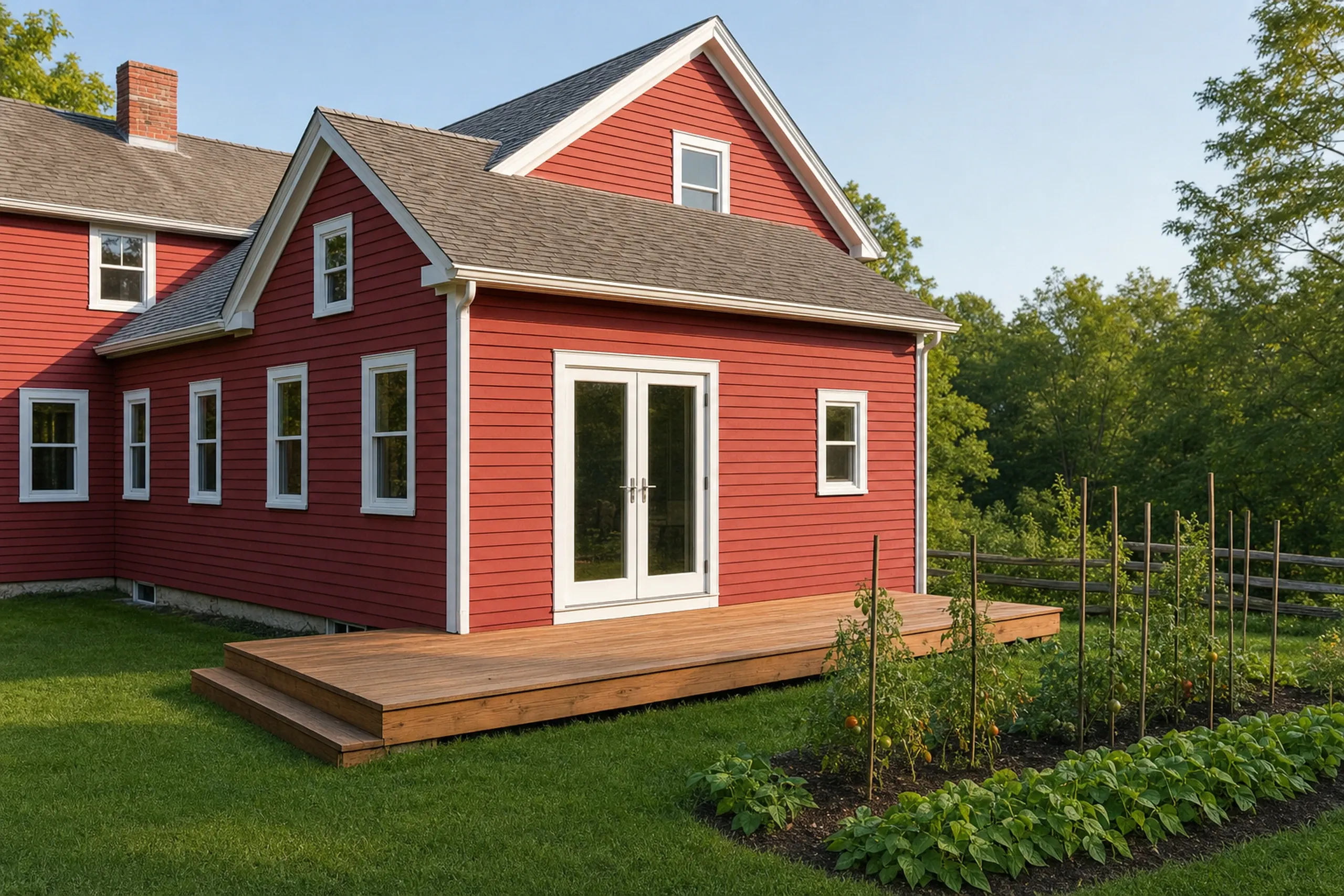
- Windows and doors are all we do
- Free estimate requests
- 22 Midcoast towns, Rockland to Belmont
- The leak under the old sill traced first
- Each sill set to its own maker's rules
- The door-to-deck joint flashed into the wall
This page covers patio door replacement on Midcoast Maine houses: swapping a leaking, sticking or fogged slider or French door, and the sill pan, sill support and flashing that keep water out where the door meets a deck.
It is for owners finding puddles inside the slider or soft floor beside it. Rockland Window Replacement traces the leak before pricing, sets each door by its own maker's sill instructions and laps the flashing into the wall.
The figure to keep: an installed patio slider or set of French doors comes to $5,000 to $16,000 as an average of many quotes, depending on the type of door, its panels, its frame and any rot under the old sill.
Why Does Water Come In Under a Sliding Door?
Water comes in under a sliding door because every door system lets some in: Pella's install manual says all window and door systems may see some water infiltration, and the sill is where it lands. A sill pan that drains back outside, which Building Science Corporation says only works if that water can get back out, is what keeps it out of the floor.
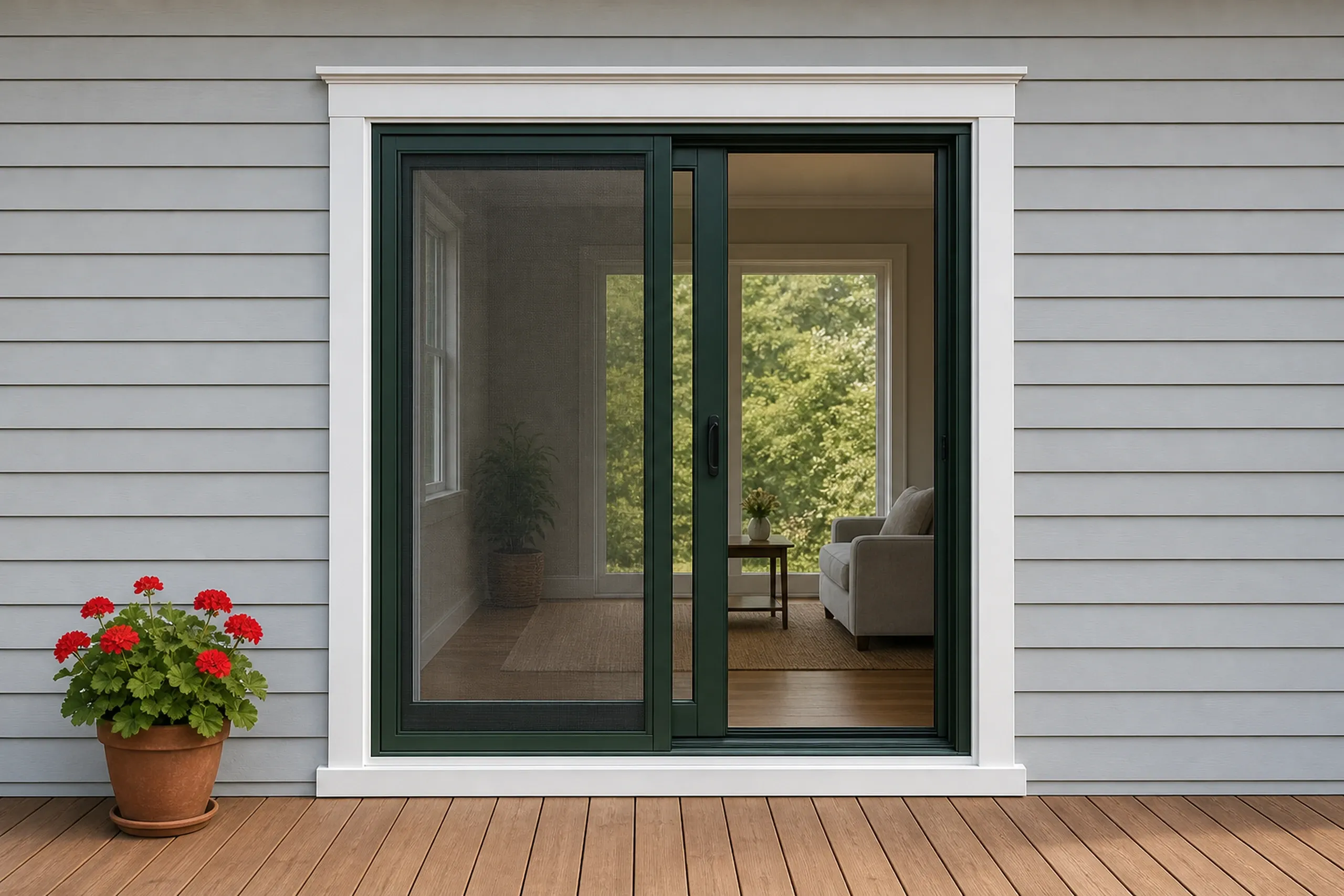
- The old sill and the floor beside it checked for rot
- A sill pan, sealant beds and support under the sill
- Tape lapped where the door meets the deck's flashing
What else do owners pair with a new patio door?
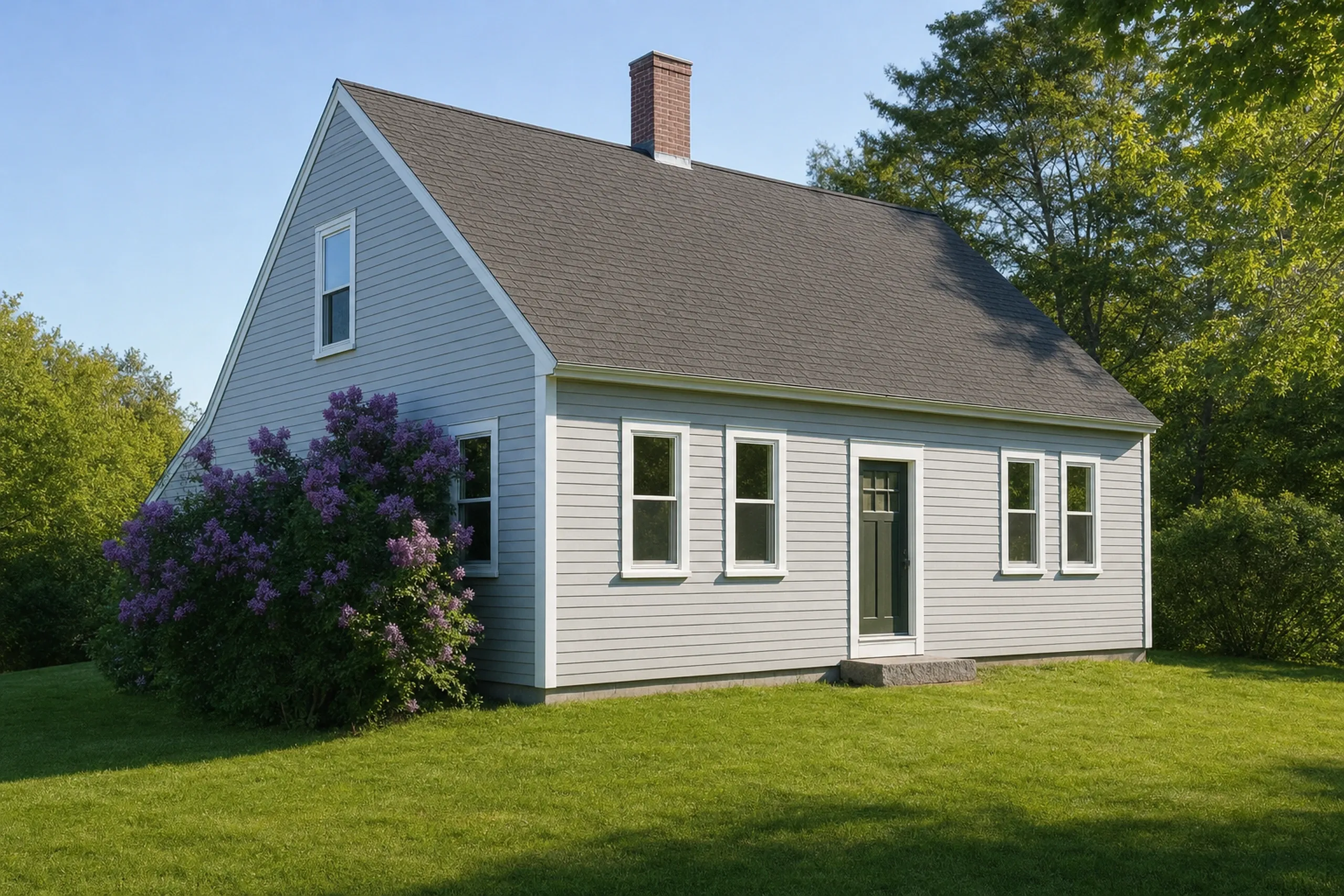 Vinyl Window ReplacementThree materials, three price points, chosen for the house and its exposure to the bay.See Vinyl Window Replacement
 Bay and Bow WindowsProjecting bays, casements, picture windows and egress openings.See Bay and Bow Windows
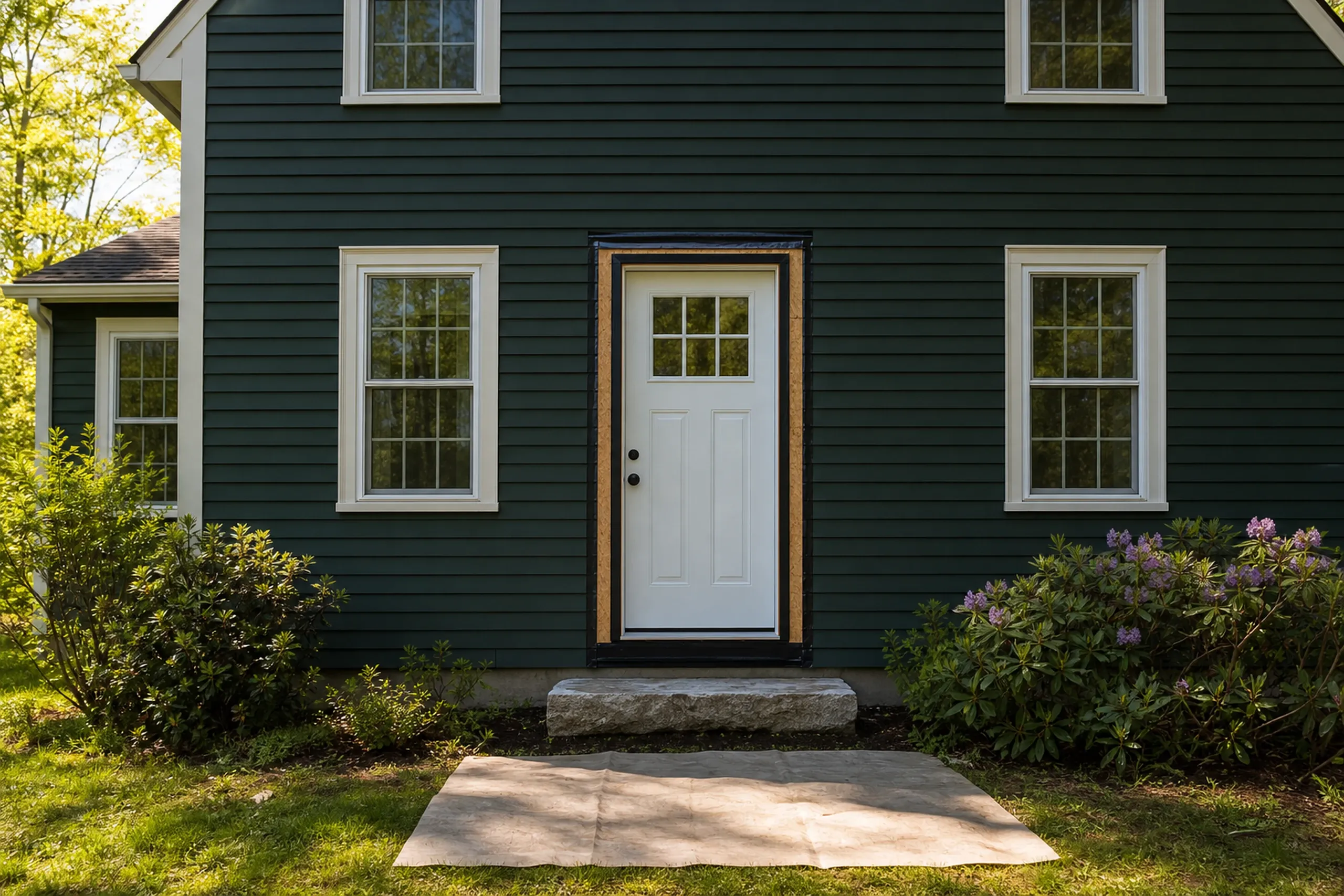 Entry Door ReplacementSteel or fiberglass, with the frame, sill and threshold that hold it square.See Entry Door Replacement
Where do we put in sliders and French doors?
- Owls HeadKnox County3 mi
- South ThomastonKnox County4 mi
- ThomastonKnox County4 mi
- RockportKnox County6 mi
- WarrenKnox County7 mi
- CamdenKnox County8 mi
- CushingKnox County9 mi
- St. GeorgeKnox County11 mi
- UnionKnox County11 mi
- HopeKnox County11 mi
- WaldoboroLincoln County13 mi
- LincolnvilleWaldo County13 mi
- FriendshipKnox County14 mi
- AppletonKnox County15 mi
- BremenLincoln County16 mi
- WashingtonKnox County17 mi
- NorthportWaldo County18 mi
- SearsmontWaldo County18 mi
- JeffersonLincoln County18 mi
- NobleboroLincoln County19 mi
- BelmontWaldo County20 mi
What Keeps a Patio Door Dry Where It Meets the Deck?
A patio door stays dry where it meets the deck through three things: the right kind of door for the space, a sill set and drained the way its maker says, and glass and hardware chosen for the weather it faces.
Slider or French Doors: Which Opens Better?
Marvin says sliding doors save space, and Andersen says hinged doors open wide as a pair while a slider typically moves one panel. Andersen offers inswing on every hinged patio line and outswing only on its A-Series and E-Series, and it notes that inswing keeps the swing off the deck.
Our view: a slider for a narrow deck, a tight kitchen or furniture near the glass, and inswing French doors where you want the whole opening and the room can spare the swing. On a small deck, an outswing door eats the space you meant to sit in.
ENERGY STAR holds the two types to different air limits, 0.3 cubic feet per minute per square foot for a sliding glass door and 0.5 for a swinging one. A door that carries the ENERGY STAR label meets its own limit either way, so the choice can rest on how you use the opening.
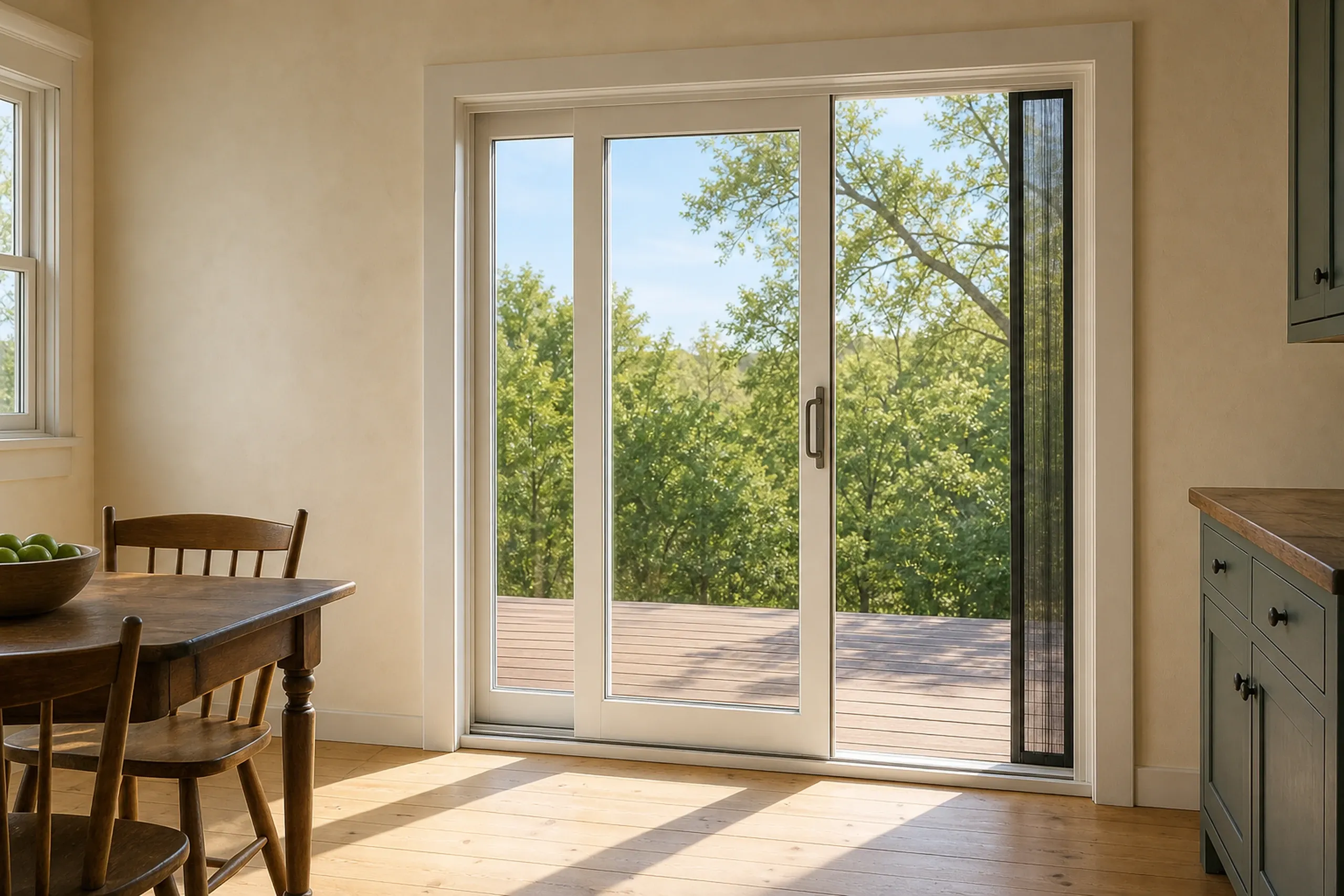
The Sill, the Pan and the Deck Ledger
Harvey's patio door guide runs sealant along each flat support surface under the sill, adds a kickplate to carry whatever part of the sill overhangs the sheathing, and fills the sill screw holes with sealant before fastening. ProVia's patio guide lays two beads of caulk on the flashing, the first at the outside edge, shims between the subfloor and the sill, and says to put no screws through the sill at all.
Those two makers give opposite rules on sill screws, which is why each door goes in by its own maker's guide and never by a single rule for every brand. Where a guide says nothing about flashing, Maine's adopted residential code fills the gap by requiring a sill pan lapped into the house wrap.
The deck is the other half of the joint, since the flashing behind its ledger (the board bolted to the house that carries the deck) meets the door's sill pan at one spot. Deck inspector Bruce Barker writes that flashing often fails at door thresholds, so we lap our tape into the house wrap and the ledger flashing there, and if the ledger turns out to be the source, you hear that from us plainly, because we do not build or repair decks.
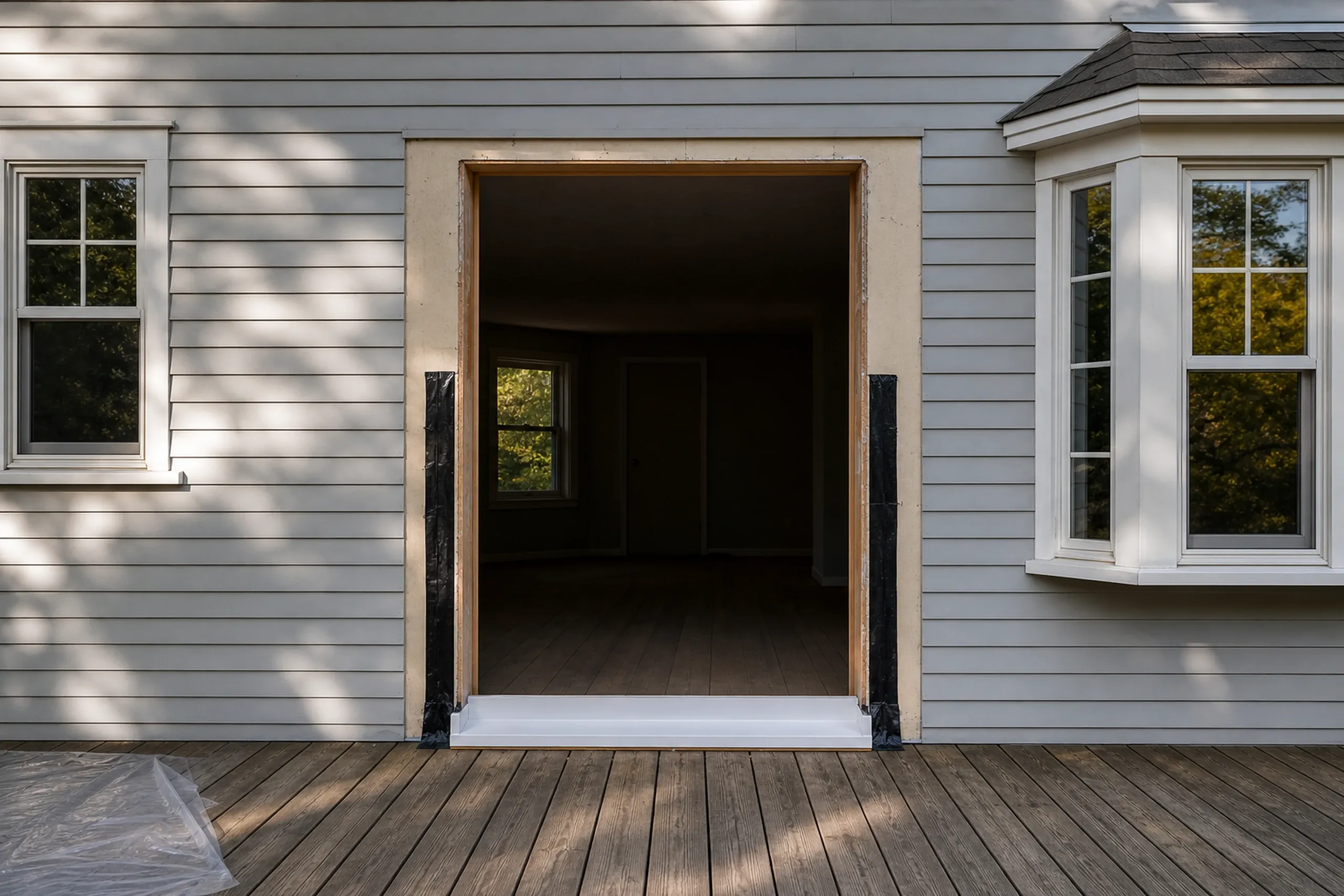
Tempered Glass, Ratings and Salt Air
Every pane in a patio door has to be safety glass: the Maine-adopted code's R308.4.1 treats all glazing in sliding and swinging doors as a hazardous location, and each pane carries its maker's mark. R308.4.2 does exempt glass that sits beside the fixed panel of a patio door.
ENERGY STAR sets doors that are more than half glass at U-0.26 or below, with a solar heat gain coefficient no higher than 0.40, in the Northern zone, and Andersen says patio doors there must meet those numbers directly, with no trade-off path. The NFRC label on the door shows both figures.
Salt shortens the fine print. Marvin cuts its clad finish coverage from twenty years to ten for a door less than a mile from salt water and covers only stainless or PVD hardware finishes there, ProVia draws its coastal hardware terms from a map keyed to zip codes, and Harvey's vinyl patio door warranty excludes salt damage.
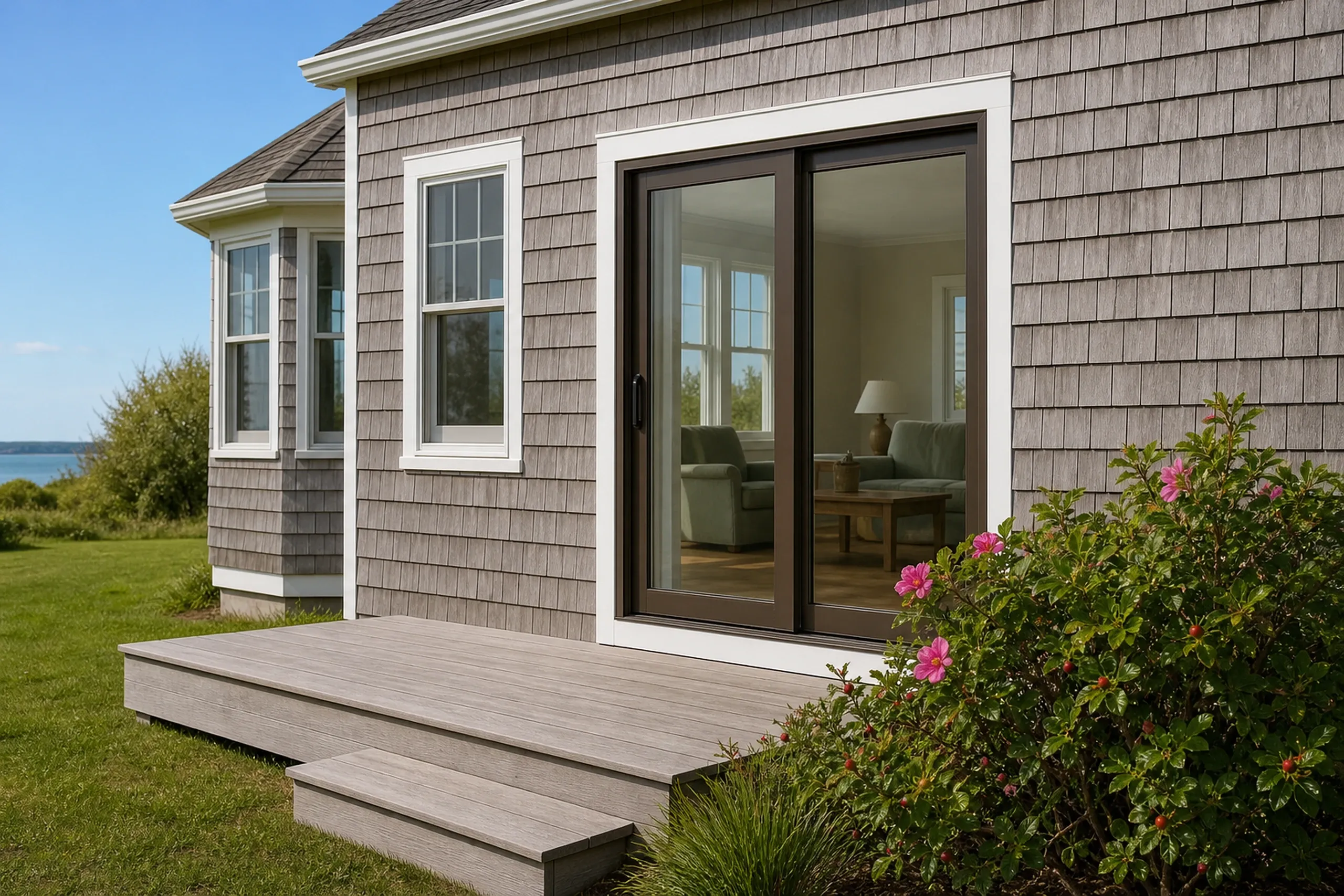
What Patio Door Services Do We Offer?
Our patio door work covers the sill and the deck joint as well as the door.
EPA's lead rule measures a removed painted part by its entire surface, and that takes in an old patio door and its casing in any house that predates 1978. So before you sign with any installer, ask whether the firm carries EPA's lead-safe certification, and expect the Renovate Right pamphlet to reach you before the old door is pulled.
- Old slider or French door out, sill and subfloor checked
- Sliding or hinged doors, inswing or outswing, on a sill pan
- Tape lapped into the house wrap and the ledger flashing
How Does an Old Slider Come Out and a New Door Go In?

The leak traced, the opening measured.
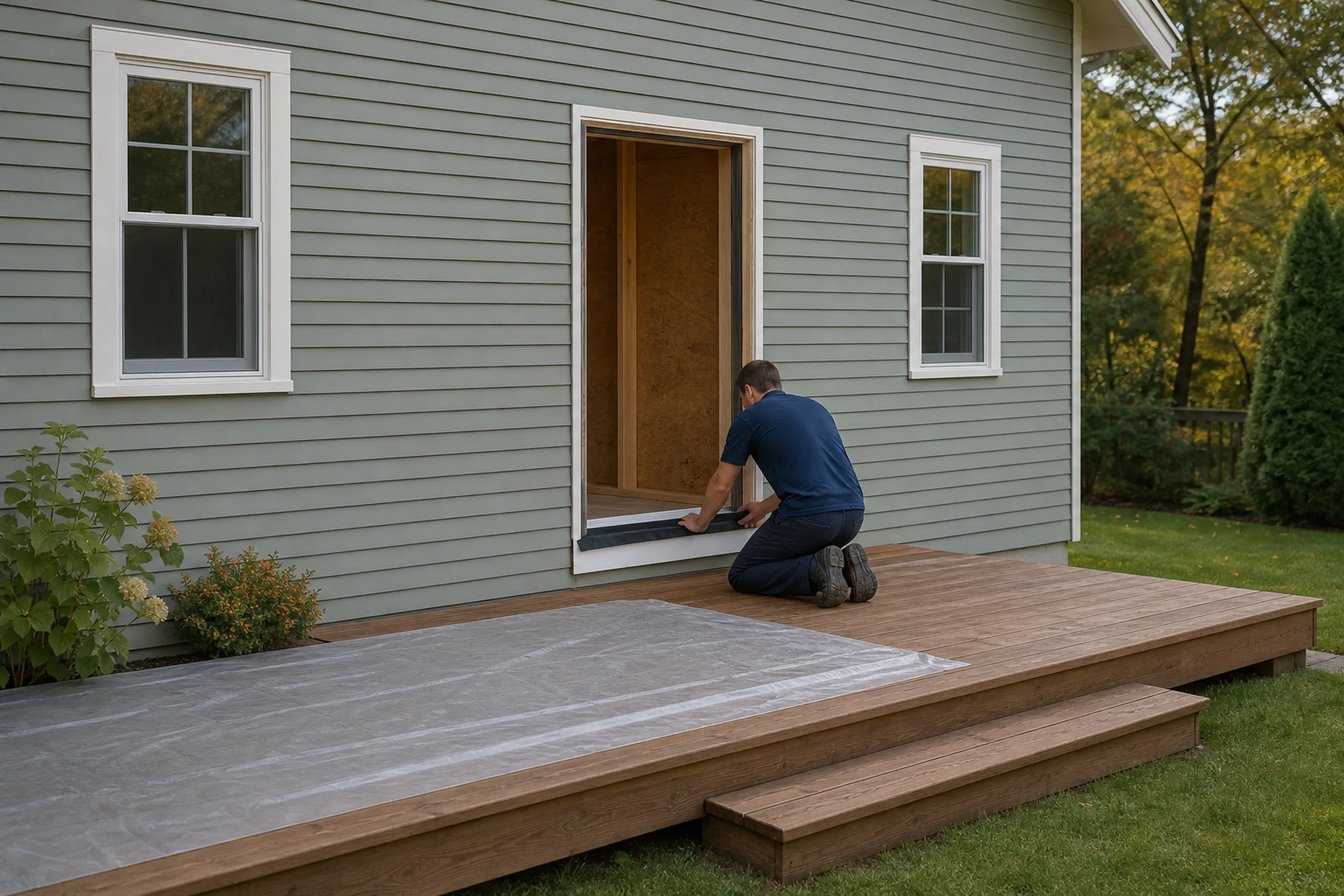
We look at the old sill from inside and from the deck, probe the subfloor beside it, find where the ledger flashing meets the door, and measure for a slider or French doors.
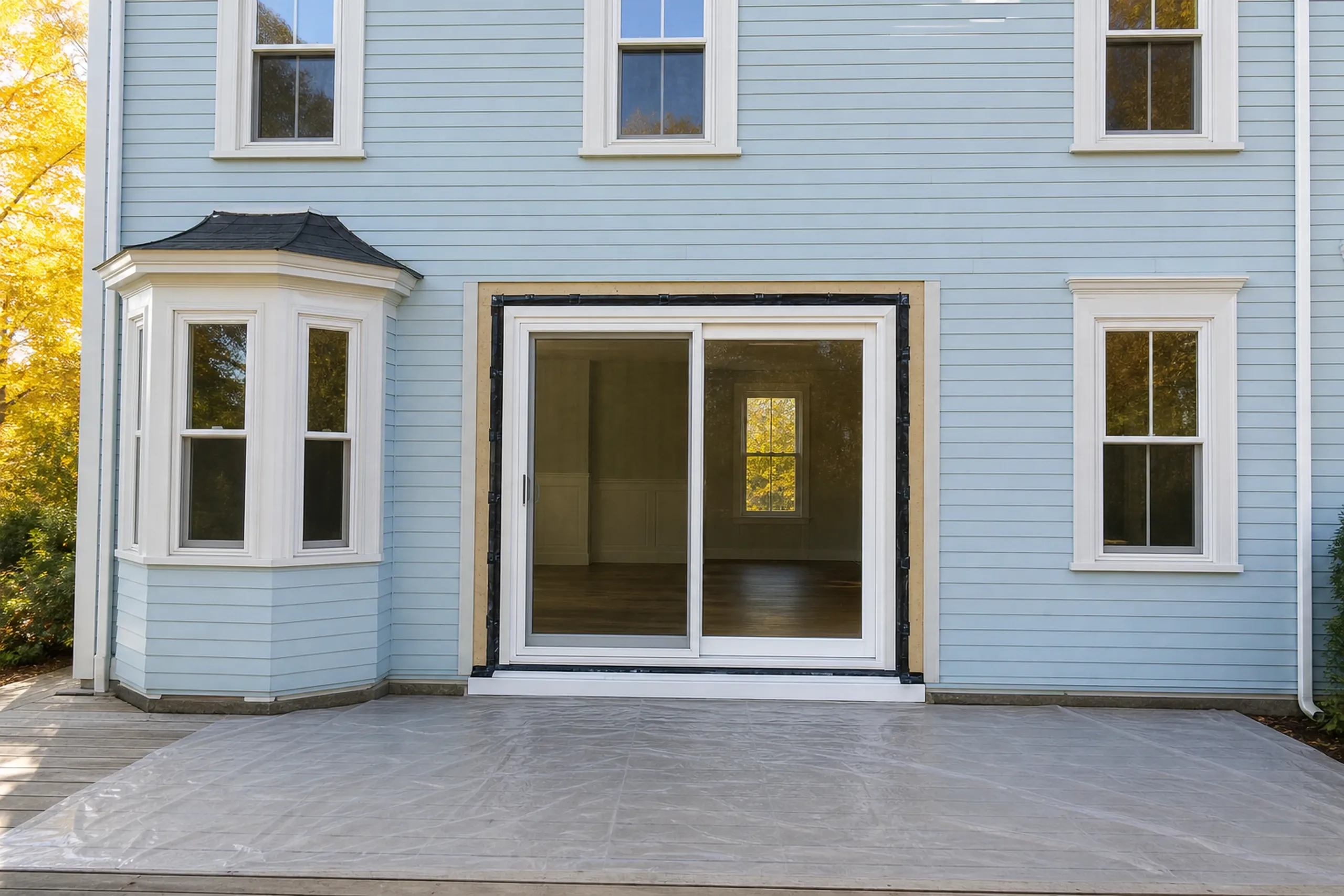
Price on paper first, signatures next, work last.
The price separates the door, the sill and flashing work and any rot, and a job over $3,000 is written into a contract both of us sign, the way 10 MRSA §1487 requires, with no more than a third due at the start. Rot found under the old sill is shown to you and written up as its own price before the new door goes in.
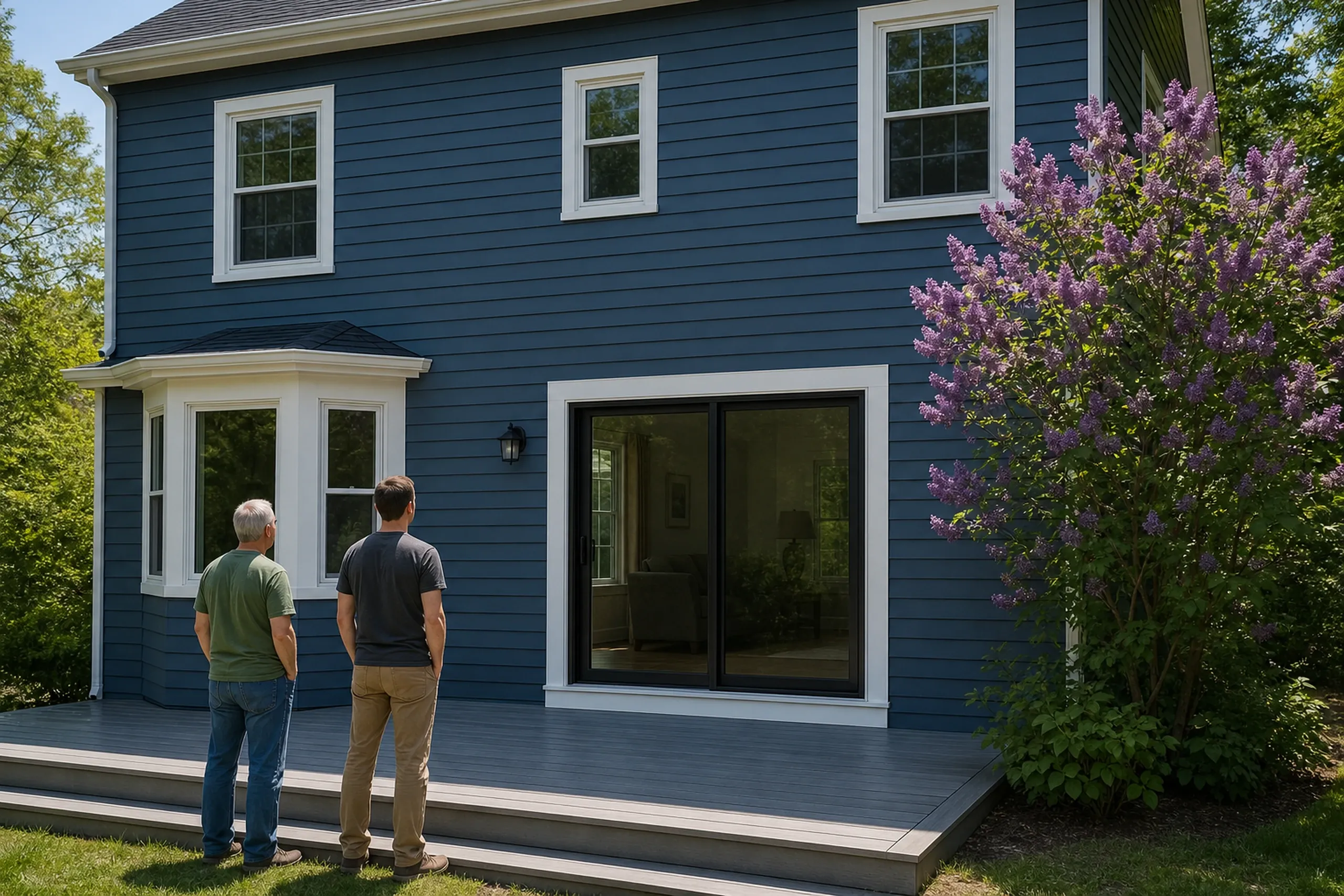
Pan, door, trim, then a walkthrough.
The old door comes out and the opening is closed again before we leave it: pan and sealant down, the new door set level and foamed with low-expansion foam, the flashing taped, then the trim and screens. The old door is hauled away, and we slide or swing the new one with you before we call it done.
Which Patio Door Replacement Fits a Deck Door?
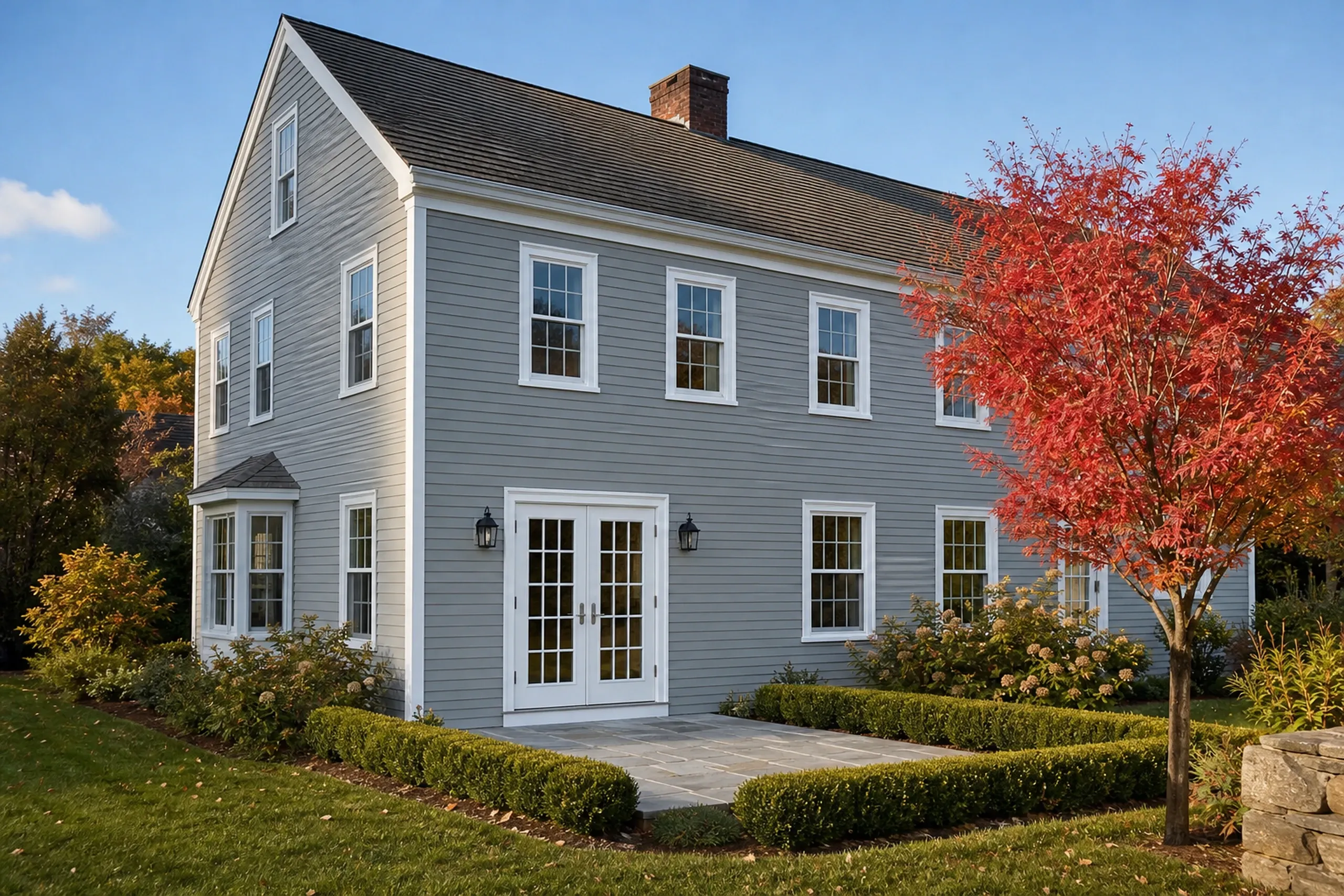
The patio door replacement that fits a deck door is the one whose sill can be supported, panned and drained over that deck: a slider where the deck is narrow or the room is tight, and inswing French doors where you want the full opening. Both work, so long as the sill joint is built right.
A new door is the right buy when the old one has fogged glass, worn rollers and tracks, a sill that lets water in, or panels that drag. Fog between the panes means the seal of the insulated glass unit has failed.
A new door is the wrong buy when the deck is the leak. If water is coming in behind a ledger that was never flashed, a new door will not stop it, and we will show you where the water is going before we price anything.
Who should replace a patio door?
The owners who should replace a patio door have a slider that sticks, leaks or has fogged, or a French door that drafts or swings into the furniture. A door that only needs new rollers may not, and we say so.
Where do patio doors take the worst weather?
Patio doors take the worst weather where they face open water, which throws the most wind-driven rain and salt at them, and wherever a deck meets the house at the door. That joint between the ledger and the sill is the first place we look.
When is a good time to replace a patio door?
A good time to replace a patio door is any season in which the opening can be closed again the same day. We like late spring or early fall for a deck door, ahead of or after the weeks the deck sees the most use.
How Much Does Patio Door Replacement Cost?
Patio door replacement runs $5,000 to $16,000 installed, on average, for either a slider or a set of French doors, a range taken from many quotes and not from your opening. Four things place a door in that band: hinged or sliding, two panels or more, what the frame is built from, and whether rot has reached the floor framing below.
| Patio door job | Average or how it is priced | What sets it |
|---|---|---|
| Patio slider or French doors | $5,000 to $16,000 | 1 to 3 days on site; panels, frame and glass |
| A door onto a deck | Priced at the visit | The sill pan and flashing where the deck meets the wall (we do not build or repair decks) |
| Rot under the old sill | Priced in writing once the old door is out | Shown to you before the new door goes in |
Averages for installed doors drawn from a broad set of quotes, not an offer for your house: the old door out and hauled away, the new door, sill pan, sealant, flashing tape, trim and screens. Rotten subfloor under the old sill is priced as its own line. Marvin, Andersen, Pella, Harvey and ProVia are trademarks owned by their makers, and none of those companies has any relationship with us.
Why do sliders and French doors take different work?
Sliders and French doors take different work because a slider runs on a track and seals at its meeting stile, while a hinged pair needs room to swing, a sill and sweeps that seal against it, and hardware at the head and sill. A French pair has more parts to fit and adjust at the opening as a result.
What moves a patio door price inside the range?
A patio door price moves inside the range on sliding or hinged first, then on the number and size of panels and the frame material, vinyl, fiberglass or wood-clad. Rot in the subfloor, the flashing work where a deck meets the wall, trim, and lead-safe work where the house predates 1978 raise it as well.
When is a new door not the fix for a leak?
A new door is not the fix for a leak when the water is coming from the deck ledger rather than the door. Then the ledger needs flashing from a deck builder, and a new door alone would sit over the same wet wall.
Is Water Getting In Under Your Slider?
Water getting in under your slider is the reason to send a free estimate request, and then we come out, follow the leak from inside and from the deck, and write a price for the door and the sill work it needs. The visit itself costs nothing.